Why You Should NEVER Use the PSI Printed on Your Tire's Sidewall
For drivers who want their tires to last and stay safe. Here are the eight things to know about tire pressure, starting with the number most people get wrong.
All 8 at a glance
- The sidewall number is a maximum — Under NHTSA's tire rule, the sidewall PSI is the most cold pressure the tire may hold. It is not your car's number.
- The sticker inside the driver's door — NHTSA requires a placard on the driver's door jamb with your car maker's recommended cold pressure.
- Check when the tires are cold — NHTSA recommends checking cold tires. AAA says that means the car hasn't been driven for at least three hours.
- Cold weather lowers your pressure — AAA says tires lose about 1 PSI for every 10°F drop in temperature.
- Check monthly, spare included — NHTSA recommends checking all tires, including the spare, at least once a month.
- Use a gauge, not your eyes — A tire can be low without looking flat. Measure all four with a reliable gauge.
- Underinflated tires — AAA says they flex too much, which builds heat and can lead to tire failure.
- Overinflated tires — AAA says too much air makes a tire more likely to suffer impact damage. The tread can also wear unevenly.
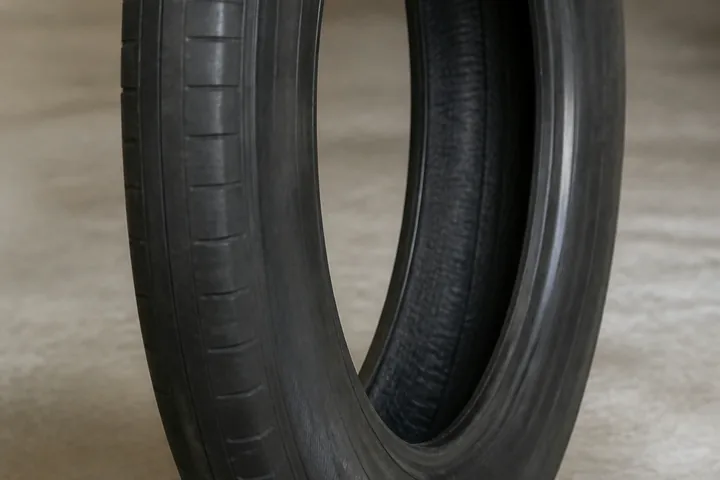
1. The Sidewall Number Is the Tire's Maximum, Not Your Car's Number
Look at the side of any tire and you will find a PSI number molded into the rubber. Many drivers think that is the pressure to fill to. It isn't.
NHTSA's tire standard, FMVSS 139, calls that number the maximum permissible inflation pressure. It defines it as the maximum cold pressure the tire may be inflated to. The same rule requires the number to be marked on each sidewall. Michelin says the same thing in plain words: it is the most pressure the tire can safely contain.
AAA is just as clear. The sidewall figure is the tire's maximum cold inflation pressure, and it is NOT the recommended pressure for your vehicle. Treat it as a ceiling, not a target. When you add air, look for your car's number somewhere else.
2. Your Car's Correct Pressure Is on the Driver's Door Sticker
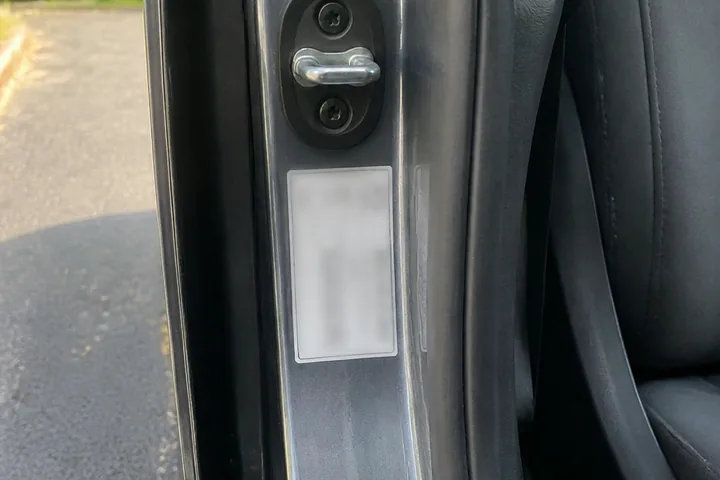
The right number for your car is on a sticker called the tire information placard. NHTSA's rule FMVSS 110 requires the placard to be permanently attached to the driver's side B-pillar. That is the door jamb you see when you open the driver's door. AAA says to look for the recommended PSI on the sticker inside the driver's-side door jamb.
Under the same rule, the placard shows the car maker's recommended cold pressure for the front tires, the rear tires and the spare. Read each line, because front, rear and spare each get their own listing. Michelin also points drivers to this placard on the driver's side door.
AAA says to check both the owner's manual and the door placard for the PSI your car needs. A simple habit helps: open the door, find the sticker, and write the numbers down. Keep them in the glove box for the next time you fill up.
3. Check the Pressure When the Tires Are Cold
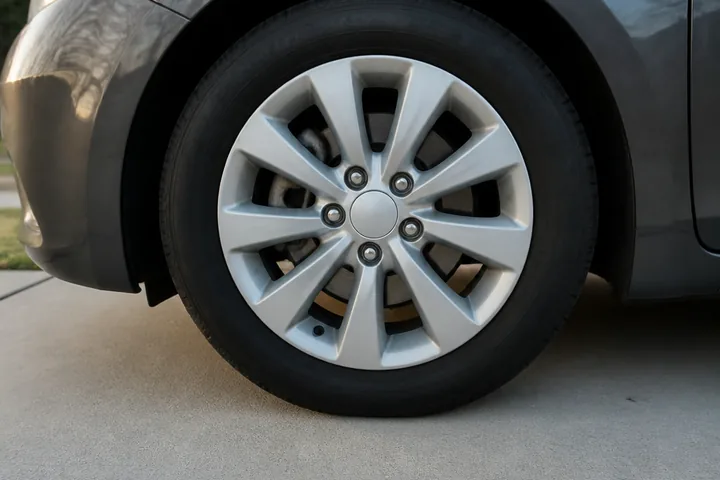
NHTSA recommends checking all tires when they are cold. Both the sidewall maximum and the door placard number are cold pressures, so a reading taken on warm tires won't match them.
What counts as cold? AAA says it means the car hasn't been driven for at least three hours. Another AAA page puts it the same way: the car has been parked for three hours or longer.
Michelin says to check cold, before driving, and not to let air out based on hot readings. The easiest time is in the morning, before your first trip of the day. If you have to drive to get air, check at home first and note how much each tire is short.
4. Cold Weather Lowers Your Tire Pressure
Temperature changes the reading. AAA says tire pressure drops about 1 PSI for every 10°F drop in temperature. A second AAA page gives the same figure: tires can lose about 1 PSI for every 10-degree drop.
That adds up. A tire that was set right on a warm afternoon can read low after a cold night, even with no leak at all.
What to look for: when the weather turns colder, don't assume last month's reading still holds. Check the tires cold and add air back to the number on the door placard, not the sidewall.
5. Check at Least Once a Month, Including the Spare
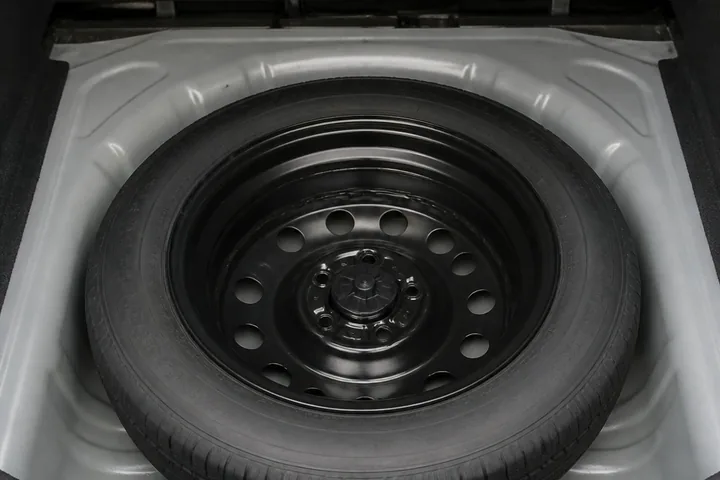
Tires can lose air slowly, and only regular checks catch it. NHTSA recommends checking all tires, including the spare, at least once a month. AAA recommends checking monthly, before long trips and whenever your dashboard gauges show low pressure.
Don't forget the spare. AAA says to make sure the spare is properly inflated too. A low spare is no help on the day you need it.
Your door placard lists a recommended cold pressure for the spare, along with the front and rear tires. Use that number. Pick an easy date to remember, like the first of each month, and check all your tires that day.
6. Use a Pressure Gauge Instead of Eyeballing It
It's easy to assume a tire is fine because it doesn't look flat and no warning light is on. That assumption is the problem. A tire can be low and still look normal.
The fix is simple: measure all four tires with a reliable pressure gauge. A gauge is a small handheld tool that presses onto the tire's valve stem and shows the pressure.
How to use it: take off the valve cap, press the gauge on firmly, read the number and put the cap back. Compare each reading with the door placard. Then add air until each tire matches its listed number, and check the spare the same way.
7. Underinflated Tires: Heat and Early Wear
Running below the placard pressure has real costs. AAA says underinflated tires flex more than they were designed to. That flexing builds up heat and can lead to tire failure.
It also wears tires out sooner. Michelin says under-inflation can cause early wear in the tire's shoulder area, the outer edges of the tread.
What to look for: readings below the door placard number, or extra wear along both outer edges of the tread. If you see that wear, have a tire shop look at the tires.
8. Overinflated Tires: The Risk of Filling to the Sidewall Number
Filling to the sidewall maximum instead of the door placard number can leave a tire with more air than your car maker recommends. More is not better.
AAA says an overinflated tire is more likely to suffer impact damage, like from a pothole. Overinflation also makes the tread wear unevenly.
What to do: if a cold reading is above the placard number, let a little air out and check again until it matches. Don't do this on hot tires, because a reading taken after driving is higher than the cold number on the placard.
The bottom line
- The PSI on the sidewall is the tire's maximum, not your car's correct pressure.
- Use the cold pressure on the driver's door placard or in your owner's manual, for the front, rear and spare tires.
- Check cold, at least once a month and before long trips, with a gauge, and expect lower readings when the weather turns cold.
The right pressure helps you avoid the heat buildup, impact damage and uneven wear that come from too little or too much air.
Sources
- 49 CFR § 571.139 - Standard No. 139; New pneumatic radial tires for light vehicles. | LII / Legal Information Institute — checked Nov 28, 2026
- 49 CFR § 571.139 - Standard No. 139; New pneumatic radial tires for light vehicles. | LII / Legal Information Institute — checked Nov 28, 2026
- What If I Have a Tire Blowout While Driving? (AAA, updated November 06, 2026) — checked Nov 28, 2026
- What is the right tire pressure for my car? | Michelin USA — checked Nov 28, 2026
- 49 CFR § 571.110 - Tire selection and rims and motor home/recreation vehicle trailer load carrying capacity information... | LII / Legal Information Institute — checked Nov 28, 2026
- 49 CFR § 571.110 - Tire selection and rims and motor home/recreation vehicle trailer load carrying capacity information... | LII / Legal Information Institute — checked Nov 28, 2026
- What If I Have a Tire Blowout While Driving? (AAA, updated November 06, 2026) — checked Nov 28, 2026
- How Temperature Changes Affect Your Tire Pressure | AAA Club Alliance (June 2, 2026) — checked Nov 28, 2026
- What is the right tire pressure for my car? | Michelin USA — checked Nov 28, 2026
- You're Probably Not Checking Your Tire Pressure Enough (Motor1) — checked Nov 28, 2026
- How Temperature Changes Affect Your Tire Pressure | AAA Club Alliance (June 2, 2026) — checked Nov 28, 2026
- What If I Have a Tire Blowout While Driving? (AAA, updated November 06, 2026) — checked Nov 28, 2026
- What is the right tire pressure for my car? | Michelin USA — checked Nov 28, 2026
- How Temperature Changes Affect Your Tire Pressure | AAA Club Alliance (June 2, 2026) — checked Nov 28, 2026
- Understanding Tire Pressure and Temperature Change (AAA, June 05, 2025) — checked Nov 28, 2026
- What If I Have a Tire Blowout While Driving? (AAA, updated November 06, 2026) — checked Nov 28, 2026
- What If I Have a Tire Blowout While Driving? (AAA, updated November 06, 2026) — checked Nov 28, 2026
- You're Probably Not Checking Your Tire Pressure Enough (Motor1) — checked Nov 28, 2026
- You're Probably Not Checking Your Tire Pressure Enough (Motor1) — checked Nov 28, 2026
- What If I Have a Tire Blowout While Driving? (AAA, updated November 06, 2026) — checked Nov 28, 2026
- What is the right tire pressure for my car? | Michelin USA — checked Nov 28, 2026
- What If I Have a Tire Blowout While Driving? (AAA, updated November 06, 2026) — checked Nov 28, 2026
- Inflating To The PSI Number On Your Tire Is A Terrible Idea: Here's Why (Jalopnik, Dec. 10, 2025) — checked Nov 28, 2026
Prices are at time of writing and change by store, region and date. Check the shelf tag before you buy.