10 Things You Should Never Do in an Automatic Car (Your Owner's Manual Agrees)
If you drive an automatic, here are 10 habits that owner's manuals tell you to stop. Each one comes with a plain reason and what to do instead.
All 10 at a glance
- Shifting into Park before the car has fully stopped — Kia, Hyundai and Mazda manuals all warn against it. Mazda says it can damage the transmission.
- Holding the car on a hill with the gas instead of the brake — Kia's DCT manual warns against it. Use the foot brake or parking brake instead.
- Resting your foot on the brake pedal while you drive — Even light, steady pressure can overheat and wear the brakes, and may even lead to brake failure.
- Shifting into Reverse or Drive before a complete stop — Kia says to make sure the car is completely stopped first.
- Coasting in Neutral — You lose engine braking, and Kia says never to coast down a hill in Neutral.
- Counting on Park alone without the parking brake — Mazda calls it dangerous. Kia says to always use the parking brake.
- Riding the brakes down a long hill — Brakes can overheat and malfunction. Slow down and shift to a lower gear instead.
- Shifting out of Park or Neutral with your foot on the gas — Shifting into gear with the engine above idle can damage the transmission.
- Shifting back into Drive from Neutral while still moving — Hyundai warns this may severely damage the transmission.
- Coasting with the engine turned off — Mazda calls it dangerous and says to find a safe place to stop.
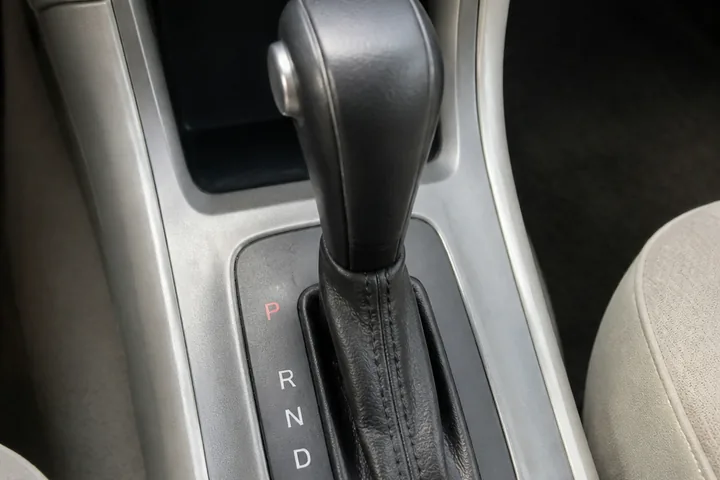
1. Shifting into Park before the car has fully stopped
It's an easy habit to fall into. You roll into a parking space, and your hand moves the shifter to P before the wheels have quit turning. All three manuals here say no. Kia says never to move the shift lever into P while the vehicle is in motion, and Hyundai says the same.
Mazda gives the reason. Shifting into P, N or R while the vehicle is moving can damage your transmission. Transmission damage is not a driveway fix. It's a job for a shop.
What to do instead: bring the car to a full stop with your foot on the brake. Wait a moment, then shift to P. Check your owner's manual for the exact steps for your car.
2. Holding the car on a hill with the gas instead of the brake
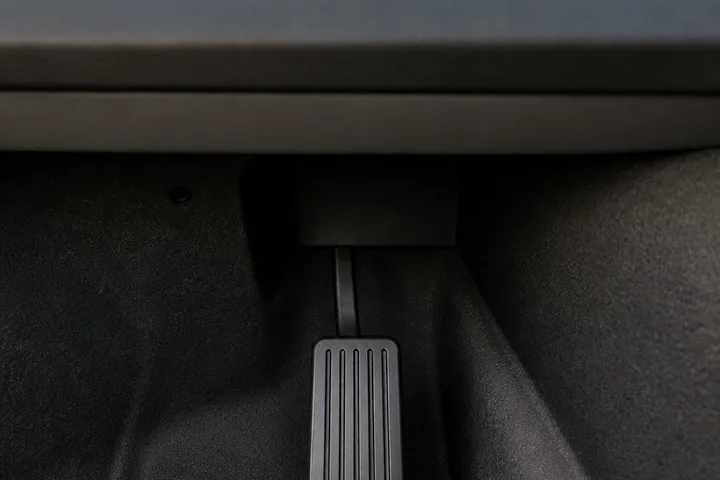
At a light on an uphill grade, some drivers keep the car from rolling back by feathering the gas pedal. Kia's manual for cars with a dual clutch transmission (DCT) brings this up in its section on DCT warning messages: holding the vehicle on a hill by applying the accelerator pedal, or creeping with the brake pedal released.
The same manual says what to do instead: to hold the vehicle on an incline, use the foot brake or the parking brake.
Not every automatic is a DCT, and the advice may differ by car. Check your owner's manual to see what kind of transmission you have and what it says about hills. If a transmission warning comes on, follow the manual and have a shop take a look.
3. Resting your foot on the brake pedal while you drive
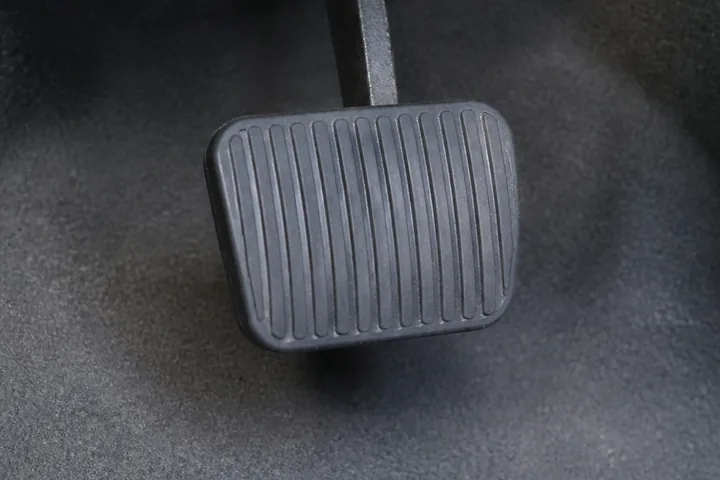
It's easy to keep your left foot, or the side of your right foot, lightly on the brake pedal without meaning to. Hyundai's manual says plainly: do not drive with your foot resting on the brake pedal. Mazda's CX-5 manual says the same thing in almost the same words.
Here is why it matters. Hyundai says even light but steady pedal pressure can cause the brakes to overheat, wear the brakes, and possibly even lead to brake failure.
What to do: keep your foot off the brake pedal when you are not braking. Check your owner's manual. If you think your brakes have been overheated or feel different, don't work on them yourself. Have a shop check them.
4. Shifting into Reverse or Drive before a complete stop
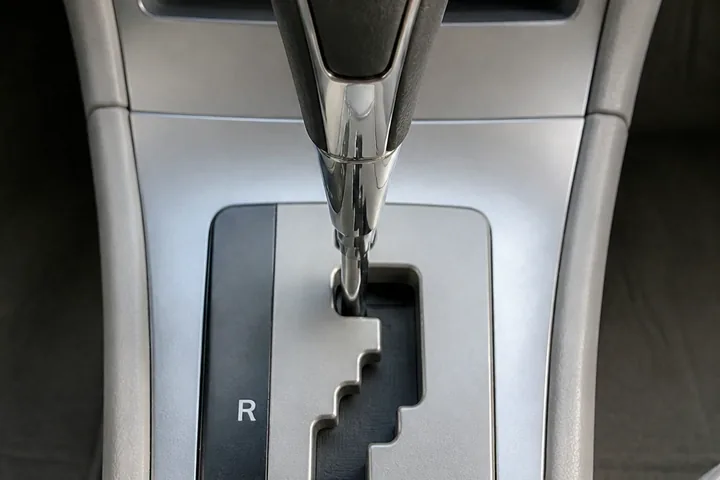
This one shows up when backing out of a driveway or doing a three-point turn. The car is still rolling back a little, and you shift into D to pull forward. Or you are still creeping forward and you shift into R.
Kia's manual says to be sure the vehicle is completely stopped before you shift into R (Reverse) or D (Drive).
What to do: stop fully with your foot on the brake, then change gears. It only takes a second. Check your owner's manual for anything specific to your model.
5. Coasting in Neutral
It can be tempting to slip the car into Neutral and coast, especially downhill. Kia's manual says never to move the transmission out of gear, into Neutral, and coast down a hill.
Hyundai explains one reason. If you shift to N while driving, the vehicle loses engine braking. That is the gentle slowing you feel when you lift off the gas while in gear.
What to do: leave the car in D while driving. Check your owner's manual for how your car handles hills and lower gears.
6. Counting on Park alone without the parking brake
The manuals say to use the parking brake every time, not just on steep hills. Mazda's manual says that setting the lever to P without using the parking brake to hold the vehicle is dangerous.
Kia agrees. Its manual says to always use the parking brake and not to depend on P alone to keep the vehicle from moving.
What to do: when you park, stop, set the parking brake, and shift to P. Check your owner's manual to see where your parking brake is and how it works. On some cars it is a pedal, on others a lever or a button.
7. Riding the brakes down a long hill
On a long downgrade, it is tempting to keep steady pressure on the brake pedal the whole way down. Kia's manual says not to "ride" the brakes, because this can cause them to overheat and malfunction.
The same manual gives the better way. When you are driving down a long hill, slow down and shift to a lower gear. That lets the engine help hold the car back, so the brakes don't have to do it alone.
How you pick a lower gear depends on your car. Some use an L or numbered position, others use buttons or paddles. Check your owner's manual. If your brakes ever smell hot or feel weak after a hill, have a shop inspect them.
8. Shifting out of Park or Neutral with your foot on the gas
This can happen when your foot lands on the wrong pedal while you shift, or when you rev the engine before pulling away. Hyundai's manual says never to shift from P or N to any other position with the accelerator pedal pressed.
Mazda's manual explains the risk. Shifting into a driving gear or reverse while the engine is running faster than idle can damage the transmission. Any repair after that is shop work.
What to do: keep your right foot firmly on the brake, not the gas, whenever you move the shifter. Let the engine settle to idle first. Check your owner's manual for the exact shifting steps.
9. Shifting back into Drive from Neutral while still moving
If you have bumped the shifter into Neutral while rolling, or shifted to N on purpose, the natural move is to push it right back into D. Hyundai's manual warns that shifting back to D while the vehicle is moving may severely damage the transmission.
The simplest fix is not to shift to Neutral while driving in the first place (see item 5). Check your owner's manual for what it says to do if your car ends up in N while moving.
If you think the transmission has been harmed, such as new noises, slipping or a warning light, don't try to fix it yourself. Take it to a shop.
10. Coasting with the engine turned off
Mazda's manual puts it bluntly: coasting with the engine turned off is dangerous.
The manual's instruction is clear. Do not coast with the engine turned off. Find a safe place to stop.
What to do: keep the engine running whenever the car is moving. Check your owner's manual.
The bottom line
- Come to a full stop before you shift into P, R or D, and keep your foot on the brake, not the gas, when you do.
- Use the brake pedal or parking brake to hold the car on hills, and set the parking brake every time you park.
- Keep your foot off the brake while driving, don't coast in Neutral or with the engine off, and use a lower gear on long downhills.
Owner's manuals warn against each of these habits, and yours has the exact rules for your car.
Sources
- Good driving practices (Kia owner's manual) — checked Nov 28, 2026
- Good driving practices (Hyundai owner's manual) — checked Nov 28, 2026
- Automatic Transmission (Mazda3 owner's manual) — checked Nov 28, 2026
- DCT warning messages (Kia owner's manual) — checked Nov 28, 2026
- DCT warning messages (Kia owner's manual) — checked Nov 28, 2026
- Good driving practices (Hyundai owner's manual) — checked Nov 28, 2026
- Good driving practices (Hyundai owner's manual) — checked Nov 28, 2026
- Brake (Mazda CX-5 owner's manual) — checked Nov 28, 2026
- Good driving practices (Kia owner's manual) — checked Nov 28, 2026
- Good driving practices (Kia owner's manual) — checked Nov 28, 2026
- Good driving practices (Hyundai owner's manual) — checked Nov 28, 2026
- Automatic Transmission (Mazda3 owner's manual) — checked Nov 28, 2026
- Good driving practices (Kia owner's manual) — checked Nov 28, 2026
- Good driving practices (Kia owner's manual) — checked Nov 28, 2026
- Good driving practices (Kia owner's manual) — checked Nov 28, 2026
- Good driving practices (Hyundai owner's manual) — checked Nov 28, 2026
- Automatic Transmission (Mazda3 owner's manual) — checked Nov 28, 2026
- Good driving practices (Hyundai owner's manual) — checked Nov 28, 2026
- Foot Brake (Mazda3 owner's manual) — checked Nov 28, 2026
- Foot Brake (Mazda3 owner's manual) — checked Nov 28, 2026
Prices are at time of writing and change by store, region and date. Check the shelf tag before you buy.